Get to Know Me
"You could claim that moving from pixelated perception, where the robot looks at sensor data, to understanding and predicting the environment is a Holy Grail of artificial intelligence." -Sebastian Thrun
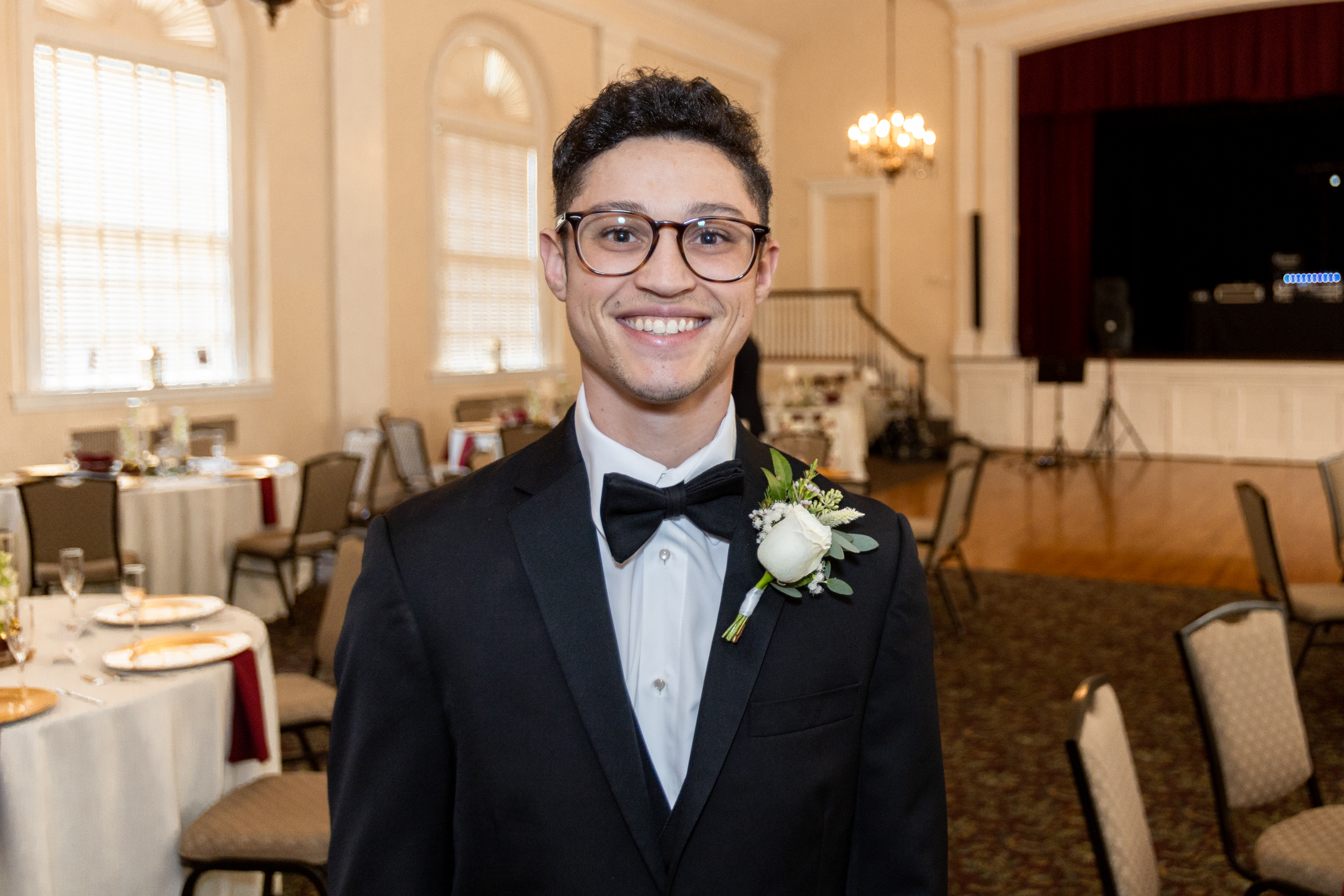
Hello, World! My name is Seth Howells, and this is my story.
From PA to WVU - College
I grew up near Allentown, PA and pursued a Global Supply Chain Management degree from West Virginia University. There, I studied forecasting demand, inventory management, purchasing power tactics, and overall the process of end-to-end distribution of products including raw materials, work-in-progress, finished goods, and final-mile. Socially, I joined a fraternity which led to leadership roles like Philanthropy Chair. Coming from a small town to a large university where I didn’t know a single person allowed me to gain the purposeful experience of being outside my comfort zone and forced me to learn about myself as much as academically.
My First Job - Logistics
Graduating on a Saturday and starting my first job in logistics the Monday after, I was eager to apply my knowledge and gain experience within the industry. Mike Johnson, CEO of ELITE Transit Solutions, played a monumental role in my development as a new grad, as an eager employee, and as someone aspiring to make the most of any opportunity. Mike taught me how even a 20-something year-old can take charge of difficult circumstances; how to estimate risk and identify good risk from the bad; how to make decisive decisions on the fly; and ultimately how to be bold in whatever opportunity comes your way.When I first started at ELITE, the company was small containing only 10-15 people. Ambitious efforts with Mike at the helm, we grew into one of Pittsburgh’s fastest growing companies and securing freight contracts with Fortune 500 companies. Soon, the small team morphed into 150+ employees within a couple of years.
My position in the company was to act as a mid-level manager bouncing between the C-level executive meetings to understand the health of the company, working with the operations team, and handling sales functions as the liaison to the clients’ transportation managers, directors of transportation, and the alike. I handled multi-million-dollar book-of-business with Fortune 500 companies, international food manufactures, and small factory-oriented companies in my portfolio. I learn to manage risk, to challenge status quos, and how to fail quickly.
Analytical Role - Finance
Looking to sharpen my data-handling skills, I began my next job as a portfolio services analyst at the
Bank of New York Mellon. Here I had the opportunity to learn in-depth details of NYSE operations and the data surrounding stock transactions.
Due to the onset of COVID-19 pandemic, my team felt the pressure of volatile markets, increased trade activity, and thinning workforce
which ultimately led to long-hour days. Because daily tasks consisted of scanning DTCC (Depository Trust) information, analyzing Stock Offer
documents, updating Excel workbooks, and posting transactions through virtual machines, I found an opportunity to increase my data-handling
skills while limiting long-hour days for me and the rest of my team.
I created some basic python scripts to handle reformatting textual documents and creating appropriate directories for
new financial documents. Then I learned to convert python scripts into Visual-Basic macros (VBA) which allowed me to automate basic Excel tasks
like: reformat tables based on standard queries, extract relevant columns, remove irrelevant information, etc. Then I ultimately saw the most
significant time reduction once I began understanding how the data was flowing within the virtual machines, which are used to verify, post, and settle trades.
My approach was to pull variable information (e.g., account, units, principal, interest) onto an excel spreadsheet
and have it mesh with non-variable inputs (e.g., internal accounts, internal tax codes) so that each row would perform the full end-to-end function
as a script. One well-placed for-loop and an entire hour's worth of work was done in one click of a button. Automating the interaction between Excel
and virtual machines resulted in 90% less time spent on 4 different tasks with a
5% chance of “skipping” a row (i.e., unprocessed row). The 5% error rate was non-critical as it would result in simply skipping the row, but
highlights where the data was missed. Simply re-running the program once more fixed this issue and therefore was not a huge problem. Across all
programs, accuracy was near 100% as this automation reduced employee mental fatigue (e.g., copied the wrong value, misplaced characters).
MS Data Science (MSDS) - Graduate School
During my time with the Bank of New York Mellon, I also enrolled in the Master of Science in Data Science program at
Lewis University with a concentration in Computer Science. As I’m finishing up my final semester boasting an overall 3.93 GPA, I reflect on
my learning in Artificial Intelligence, Machine Learning, database management, cybersecurity, and what I found to be my niche: computer vision.
In my program I have implemented several deep learning frameworks, such as generative adversarial networks (GAN) for image denoising,
convolutional neural networks (CNN) for classification and regression problems, and transformer neural networks for vision. Supervised and Unsupervised Machine
Learning were also large areas of my study for various tasks associated with projects on the main page. I still have a lot to learn as I'm passionate about
all projects and genuinely have fun learning and implementing!